
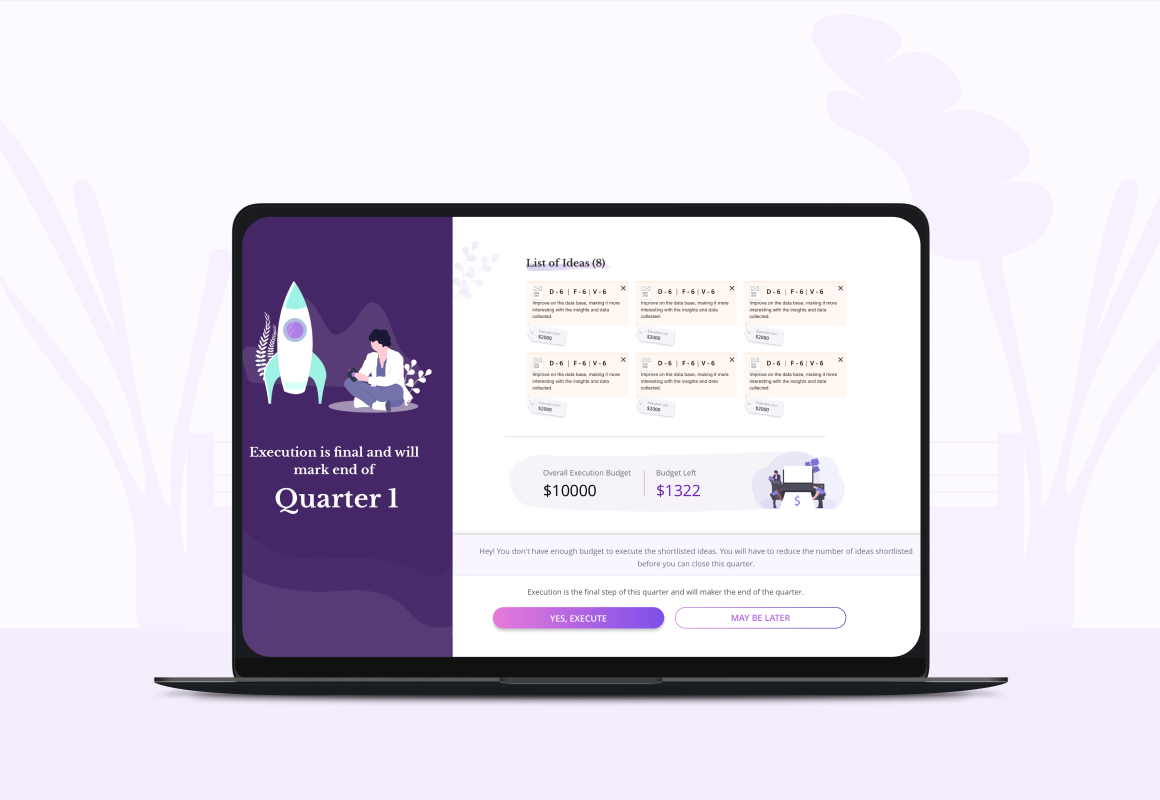
What is a simulation game?
A simulation game describes a diverse super-category of games, generally designed to closely simulate real-world activities. This attempts to copy various activities from real life in the form of a game for various purposes such as training, analysis.
-------------------------
This simulation is for Design Thinking learners to apply their learnings in a simulated world, fail safely and learn by doing.
Design Thinking has become a buzzword and its demand has increased exponentially in the past few years. There are multiple companies/individuals who conduct DT workshops, provide online courses. The missing part in these workshops, books, and courses is the application of the concepts and the engaging factor. Most of the activities conducted in the workshop are not realistic.
Simulate a real-world scenario in the form of a game. This gamified product creates an engaging simulated world where learners can apply their concepts, fail safely and learn from the mistakes. Learning by doing.
I lead the end-to-end design for this project (both UX & UI). Worked hands-on on complete UX process and collaborated with a junior designer for creating a design system and the visual designs.
This simulation will be used in the application phase of online courses and workshop sessions conducted by Knolskape.

“Design Thinking is a method of meeting humans’ needs and desires in a technologically feasible and strategically viable way”
- Tim Brown, CEO & President, IDEO
Any company who wants to train their team to transform the way organizations develop products, services, processes, and strategy
• First Time Managers
• Middle level Managers
Being at a start-up, we always run at tight deadlines. Despite that, I make sure that the design process is not compromised. Here is the process we followed:

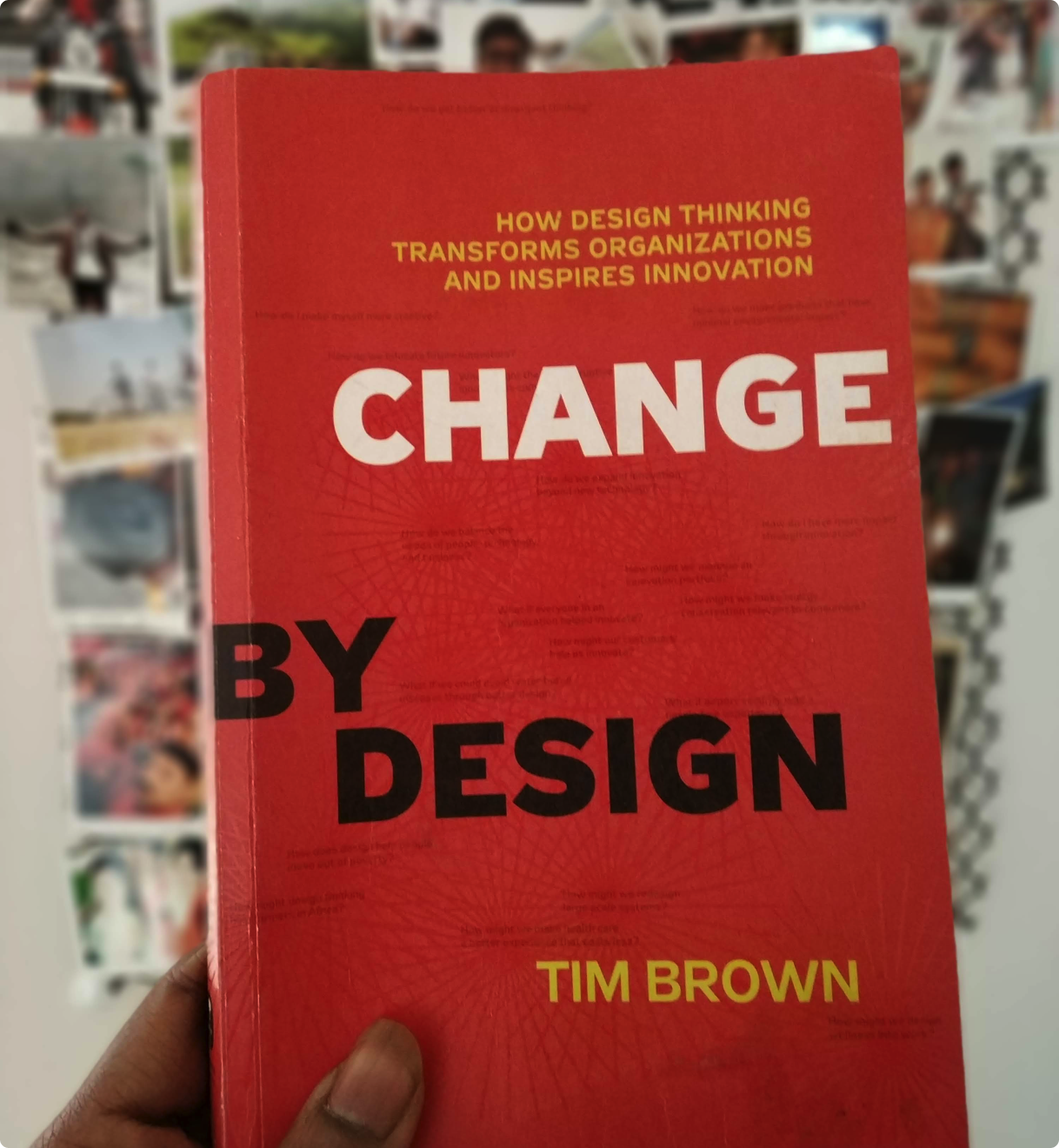
My preparation has started 1 month before the project begins. Unlike any other web apps, designing for simulation needs subject matter expertise to gamify those learning concepts. Read this amazing book “Change By Design” by Tim Brown (CEO of IDEO) (who coined the word Design thinking) which helped me understand the concepts and various applications of it.
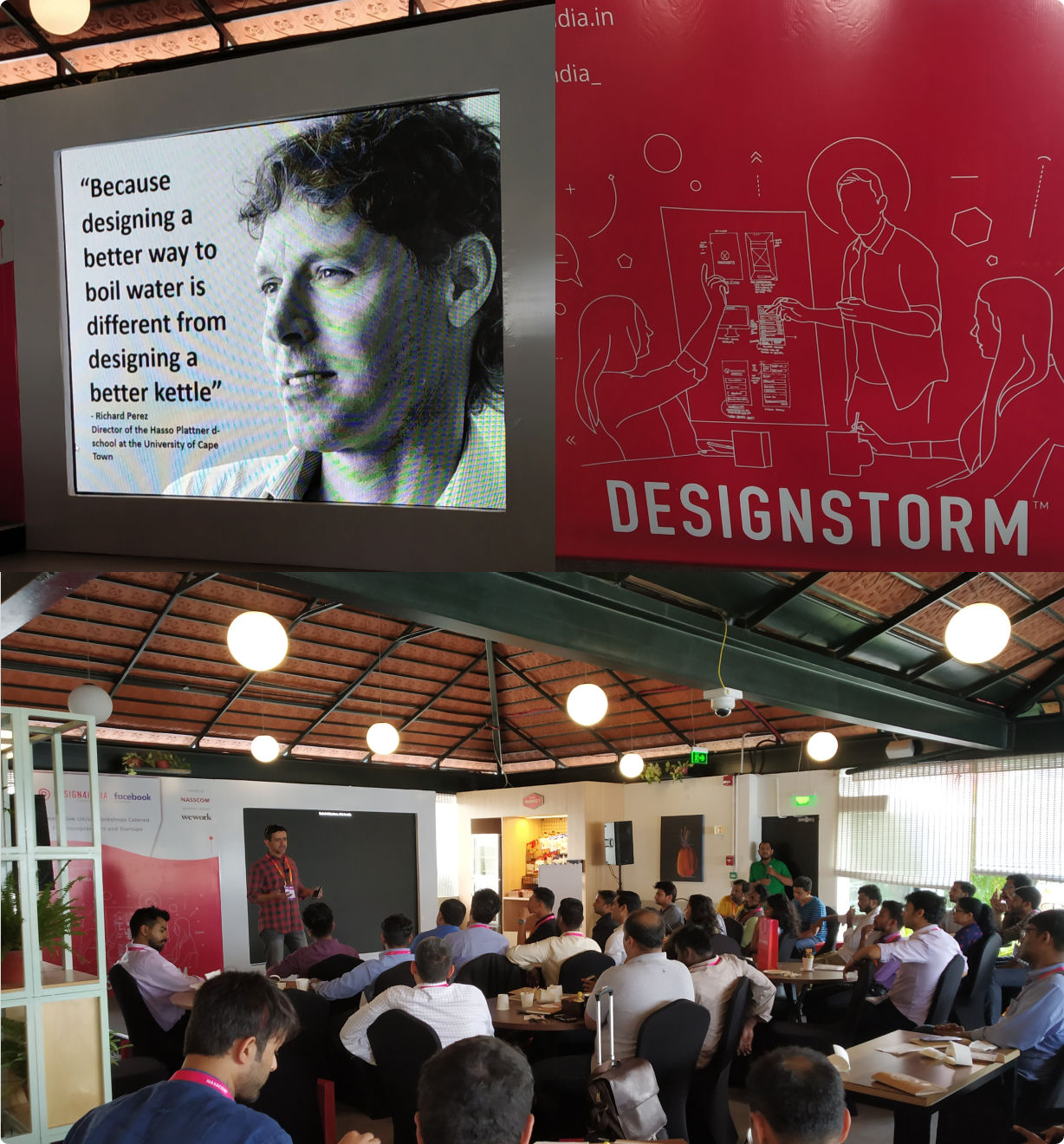
Attended a couple of internal and external workshops as a participant to understand the audience and workshop structure. This helped me in experiencing what our participants go through during a Workshop.
Had multiple sessions with the product owner, CEO and other in-house SMEs to understand the requirements, craft the learning outcomes, design the gameplay and storyline.
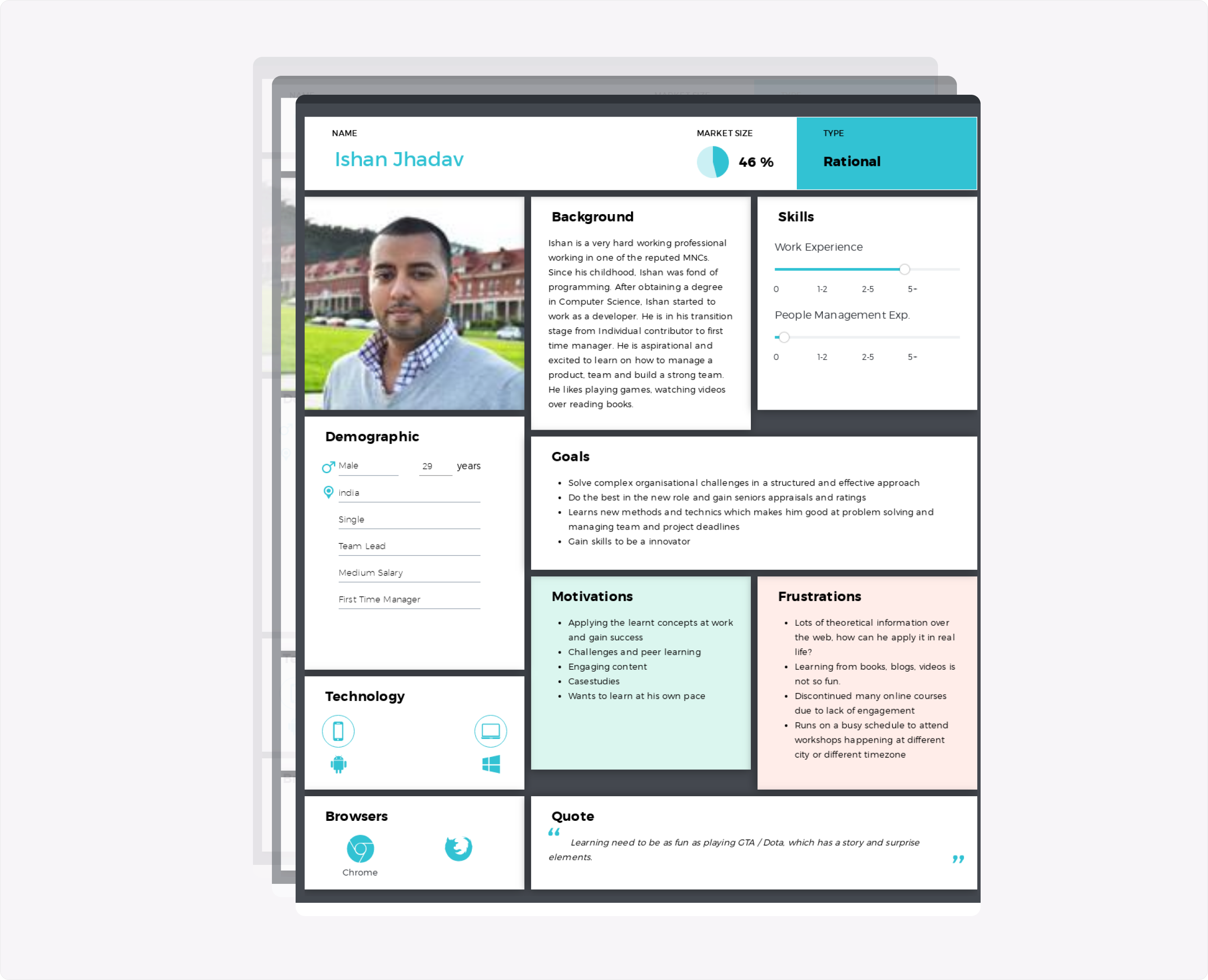
Created personas based on the company’s target audience.
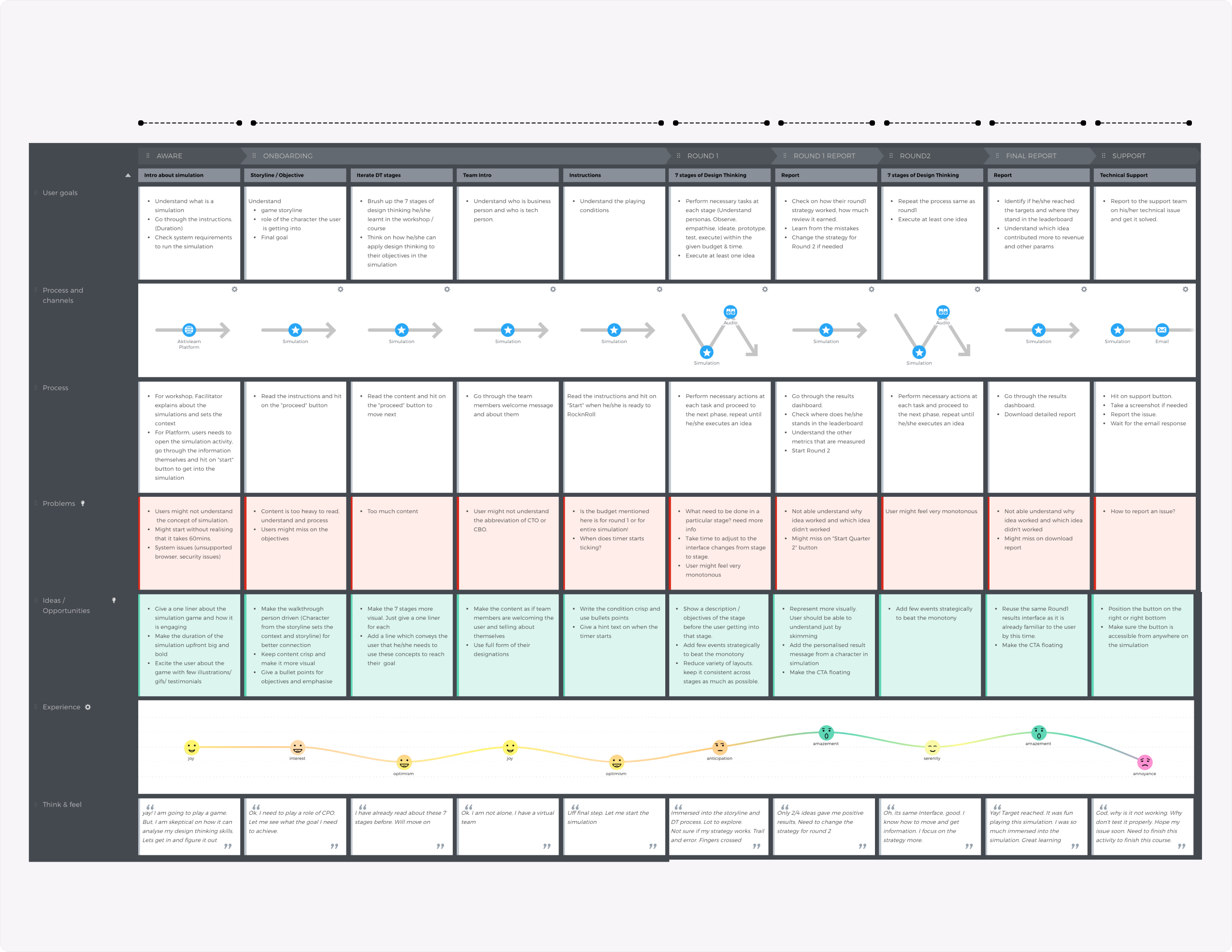
User journey map gave us a better understanding of end-to-end customer experience. It's a structured way of identifying and solving a problem at substage level.
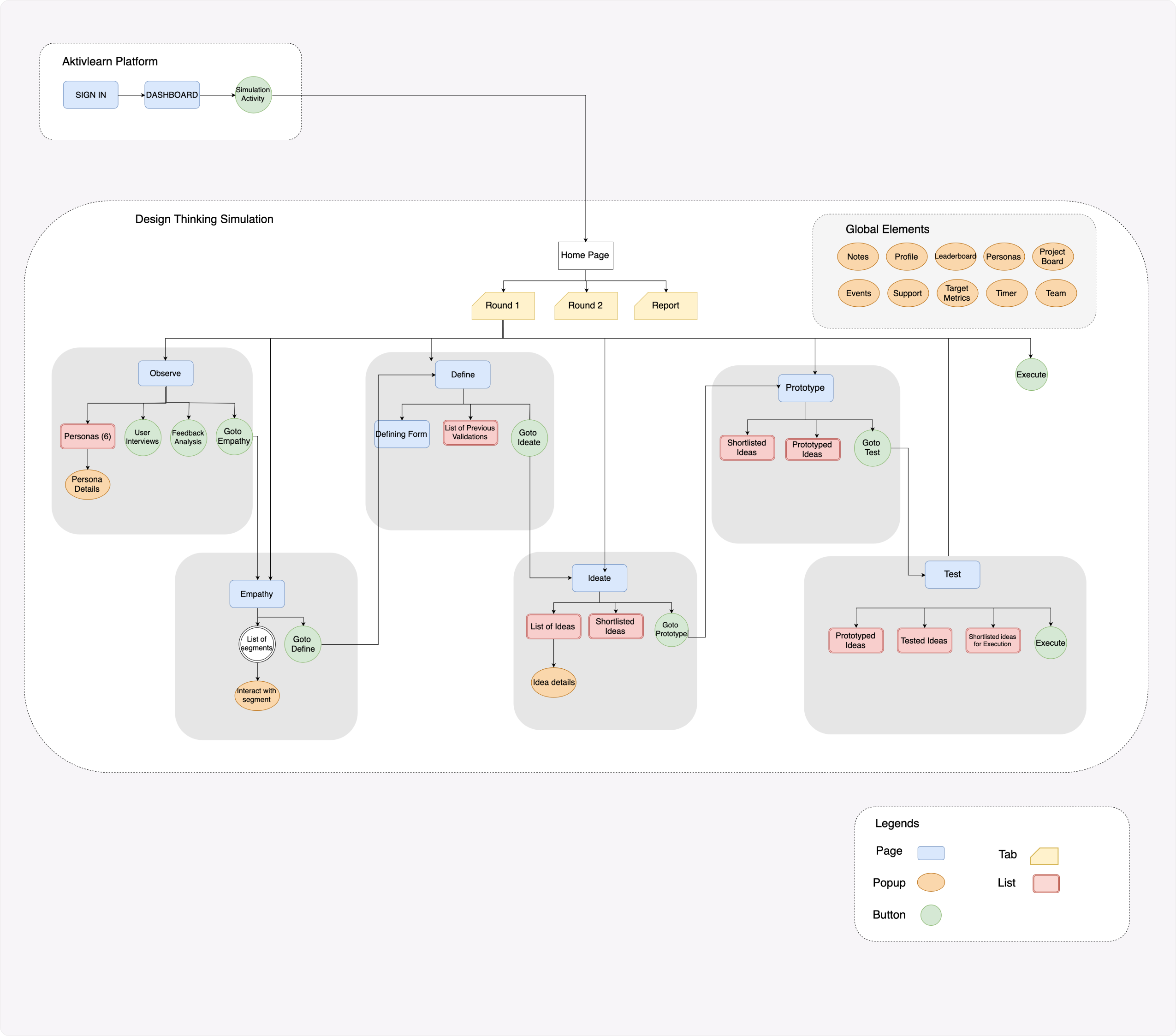
Unlike other simulations I have built, this is a process-oriented simulation. Which means users need to go through multiple stages to accomplish their tasks. More over simulations are content driven and content heavy by nature. So, information architecture plays an important role here. Ended up with the following Information Architecture after a couple of iterations.
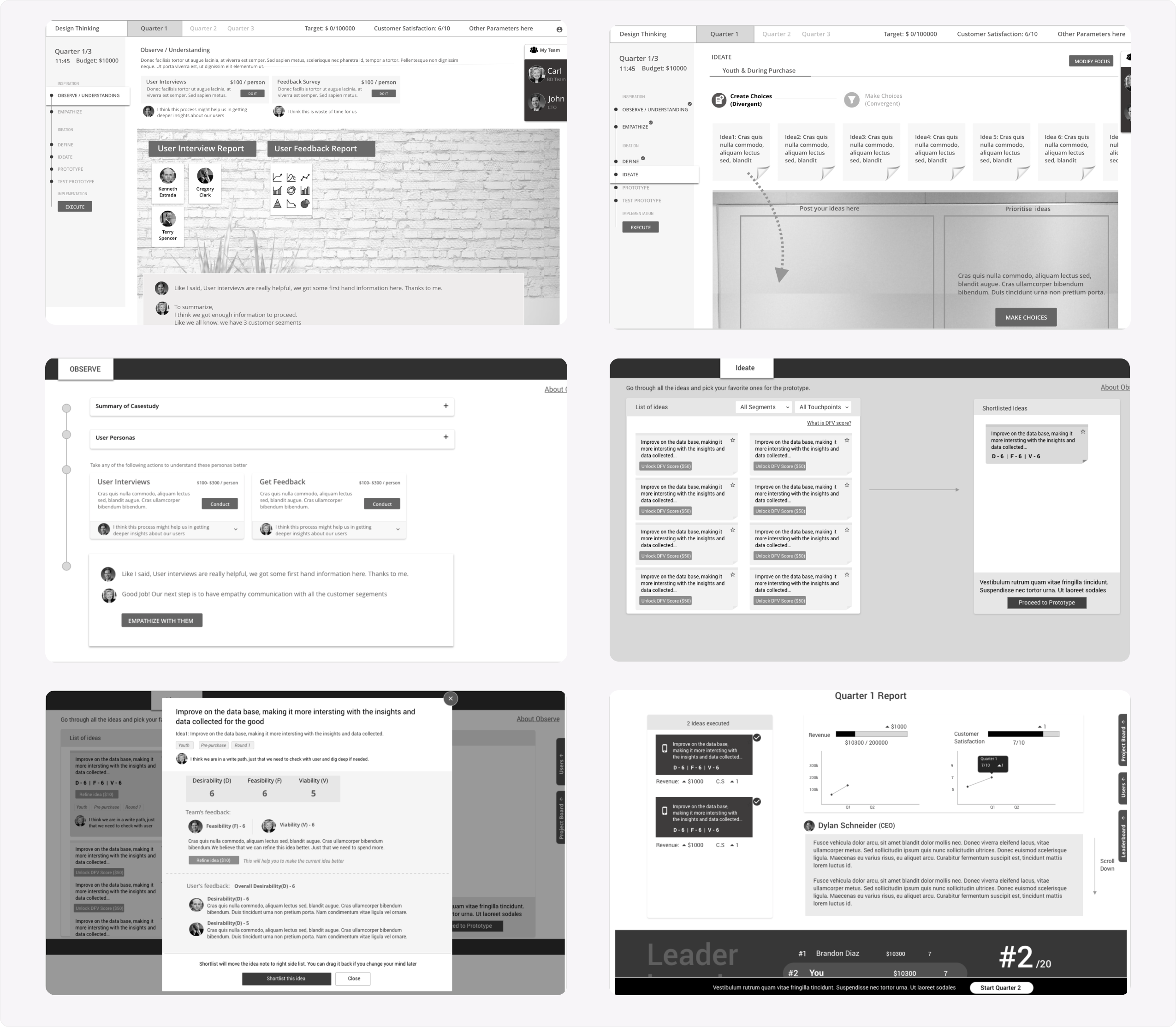
After hours of whiteboard brainstorming where all my ideas were diverged and converged, I started wireframing. Iterated relentlessly on the wireframes by continuously testing with users and SMEs. User testing at this phase of design helped us in solving a few critical problems and creating a better experience. Did over 10 iterations before freezing on the flow, navigation, layout.
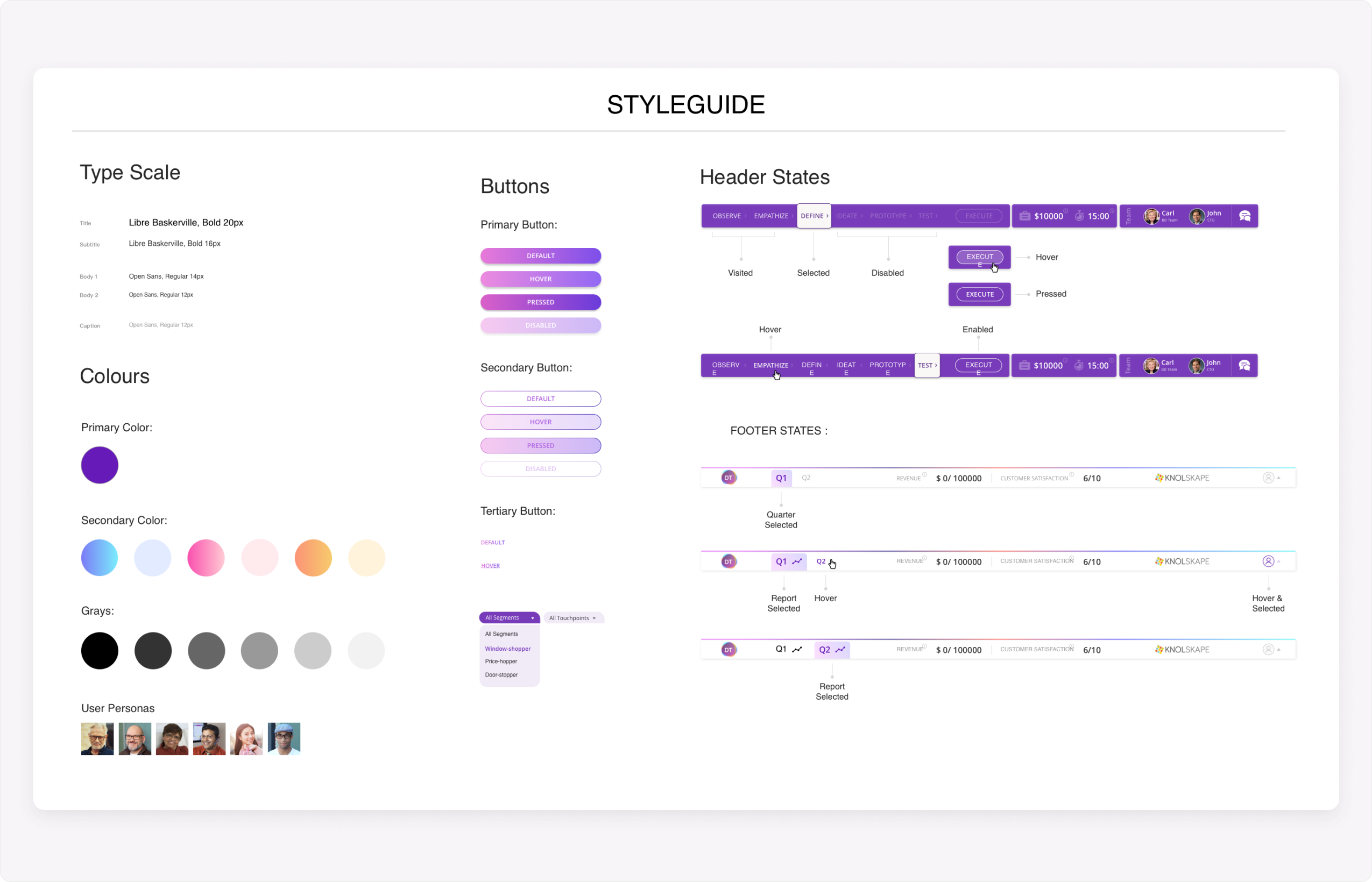
Styleguide has been created based on the simulation and concept attributes: fun, friendly, creative, wisdom, minimal, trendy. After we froze on the wireframes, I made a list of components that were used and created a design system by collaborating with my junior designer. Helped her in understanding the importance and functionality of design systems during the process of creation.
Having styleguide and wireframes in places made screen designing so easy. However, there are few challenges at this stage of the design
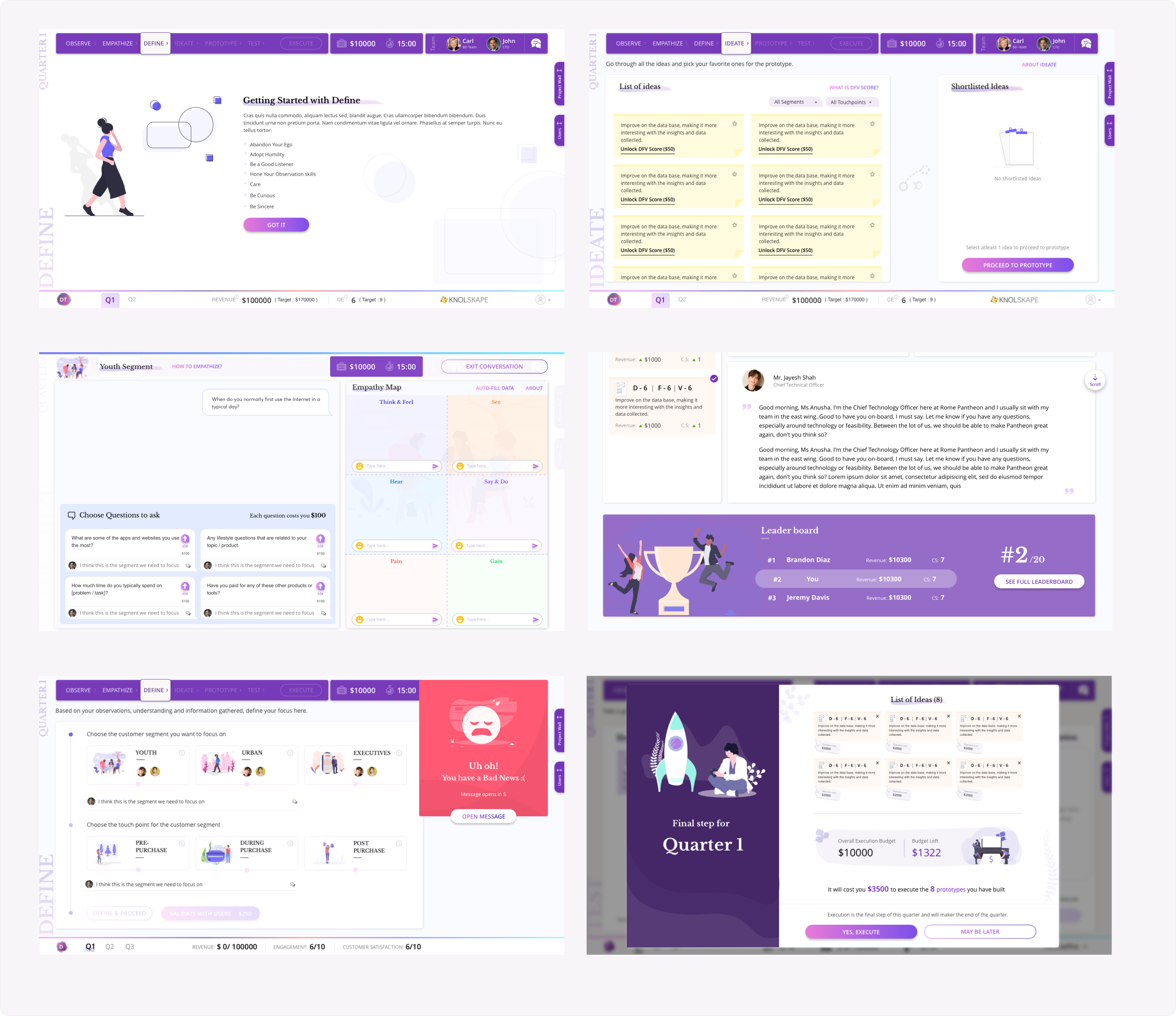
We included testing as part of our agile and sprint based development. There is some qualitative testing happened at every milestone which helped us in identifying a few critical issues sooner.
We conducted a couple of pilot runs within the organization simulating the real workshop setup. Each pilot run has over 20 participants.
• 100% of the users were able to accomplish the simulation on time.
• Received 4.25/5 for the overall experience.
⁃ Run1: 4/5 [20 Participants]
⁃ Run2: 4.5/5 [17 Participants]
• Illustrations, GIFs engaged the participants
• Leaderboard made the participants more compititive.
• Participants were able to understand the intended learning outcomes.

